
How To Learn Macedonian: A Complete Beginner's Guide

Author
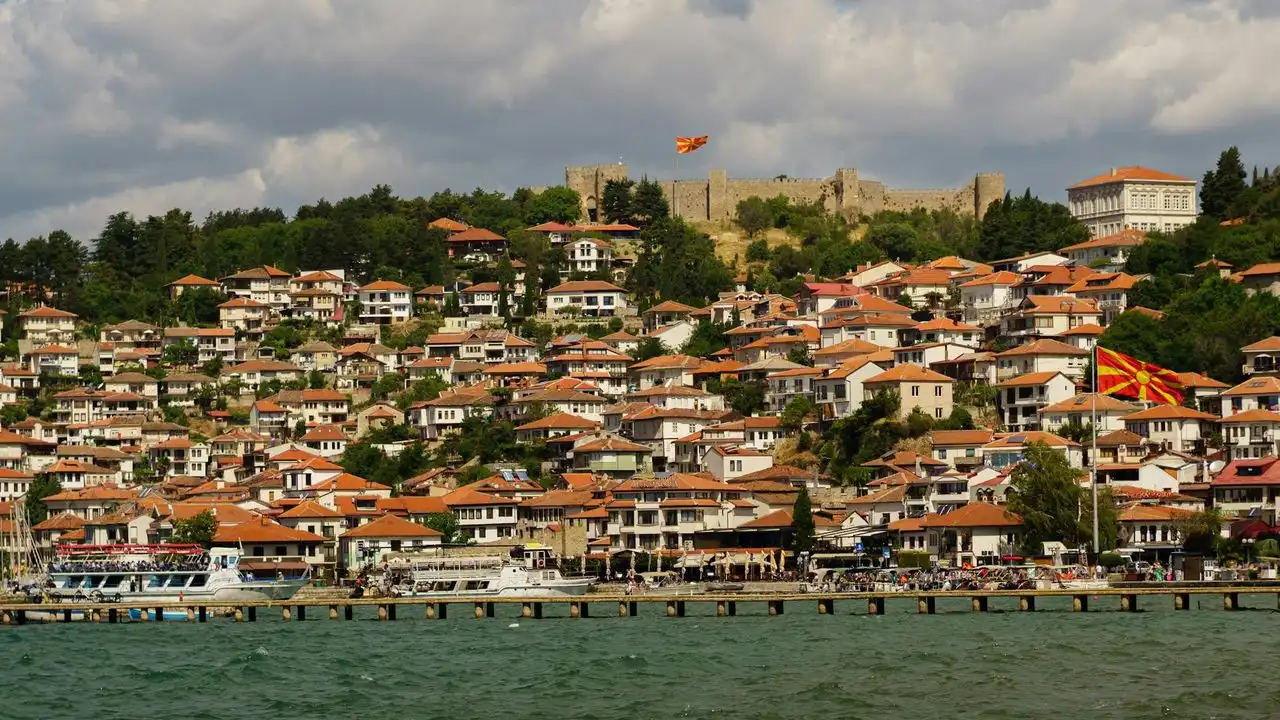
Learning Macedonian is an incredibly rewarding journey that opens up a rich culture and history.
This complete beginner’s guide will show you exactly how to start learning the language effectively.
You’ll learn the best resources, the grammatical foundations, and practical tips to achieve fluency.
Here are the core steps you need to take to master Macedonian.
Table of Contents:
Learn the Cyrillic alphabet
Macedonian is written using the Cyrillic alphabet.
It contains 31 letters, and each letter corresponds to a single sound.
This makes reading Macedonian incredibly straightforward once you memorize the characters.
You don’t have to worry about silent letters or confusing spelling rules.
Spend your first few days exclusively practicing reading and writing these letters.
Some letters will look familiar to English speakers, while others are entirely unique to the region.
Here are a few specific Macedonian letters you should focus on:
| Cyrillic Letter | Latin Equivalent | Pronunciation |
|---|---|---|
| Ѓ ѓ | Ǵ ǵ | Like the “gy” in “argyu” |
| Ќ ќ | Ḱ ḱ | Like the “cu” in “cute” |
| Љ љ | Lj lj | Like the “lli” in “million” |
| Њ њ | Nj nj | Like the “ny” in “canyon” |
| Ѕ ѕ | Dz dz | Like the “ds” in “kids” |
| Џ џ | Dž dž | Like the “j” in “jump” |
Start with core vocabulary and phrases
Your next step is to build a foundation of high-frequency words and everyday phrases.
Focus on greetings, numbers, and basic questions first.
This allows you to start having simple conversations immediately.
Learn how to introduce yourself and how to ask people how they are doing.
Здраво.
Како си?
Добар сум, благодарам.
Како се викаш?
Understand basic Macedonian grammar
Macedonian grammar has a few unique features compared to other Slavic languages.
There are no noun cases to memorize in modern Macedonian.
This is a huge relief for beginners who struggle with grammar.
Instead, the language relies heavily on prepositions to show relationships between words.
Another unique feature is the definite article, which functions similarly to “the” in English.
However, in Macedonian, the definite article is attached to the end of the noun as a suffix.
| English | Macedonian Noun | Macedonian with Article (The) |
|---|---|---|
| City / The city | Град (Grad) | Градот (Gradot) |
| Book / The book | Книга (Kniga) | Книгата (Knigata) |
| Village / The village | Село (Selo) | Селото (Seloto) |
Immerse yourself in the language
Language acquisition happens when you get massive amounts of comprehensible input.
You need to listen to and read Macedonian as much as possible.
Listen to Macedonian music, podcasts, and watch local TV shows.
Even if you don’t understand everything at first, your brain will adapt to the sounds.
Speak with native speakers regularly to build your speaking confidence.
Don’t worry about making mistakes during your early conversations.
Choose the best resources and courses
Having a structured learning path is crucial for making consistent progress.
I highly recommend our platform, Talk In Macedonian, as the absolute best place to start.
It’s designed specifically for beginners and uses proven language acquisition methods.
You can also supplement your learning with community tutors on italki.
Using digital flashcards like Anki will help you memorize new vocabulary quickly.
Be aware of regional variations
Macedonian has several distinct regional dialects that you might encounter.
The standard language is based on the west-central dialects around Prilep, Bitola, and Veles.
People in the eastern or northern regions might use different vocabulary or pronunciation.
For example, speakers in the eastern region often drop certain vowel sounds or use different verb endings.
Stick to standard Macedonian as a beginner, but don’t be surprised if you hear local variations.
Embracing these regional differences will eventually deepen your understanding of the culture.
