
Here Are Some Common Macedonian Greetings For Beginners

Author
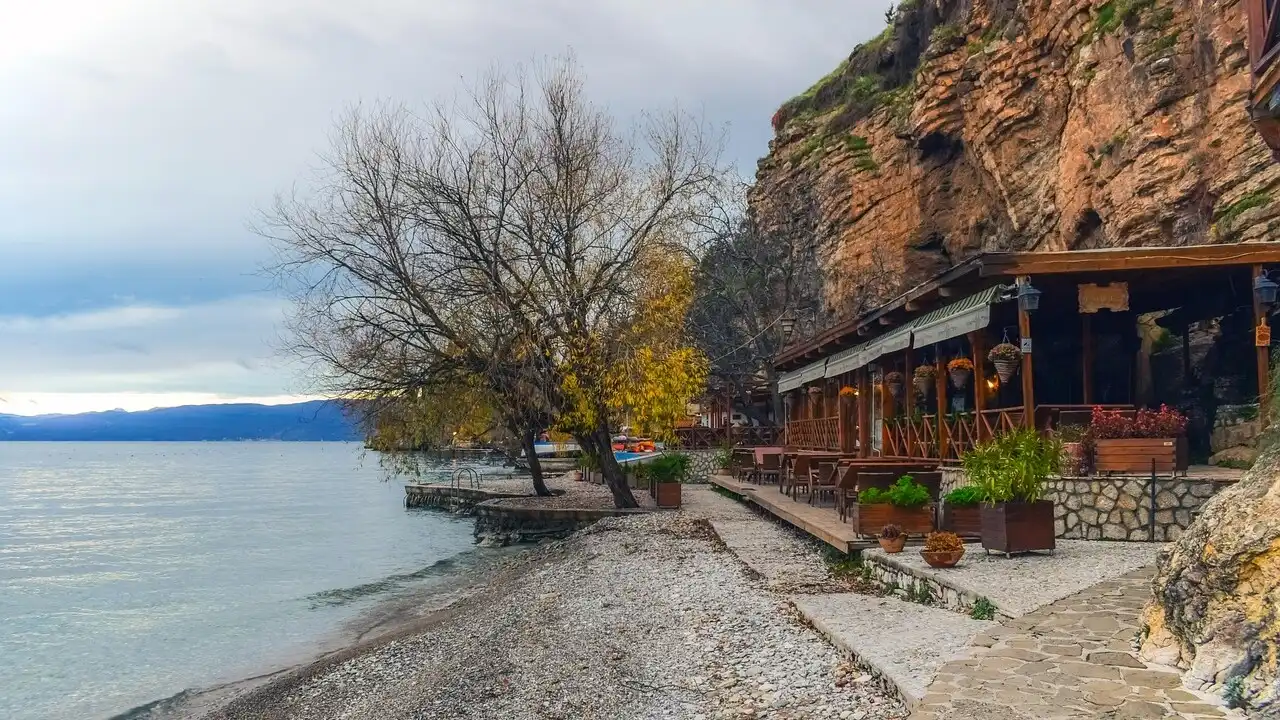
Macedonians are incredibly hospitable and warm people.
If you make even a small effort to speak their language, they will appreciate it immediately.
You don’t need to have perfect grammar to make a good first impression.
You just need to know how to greet people correctly.
However, there’s a difference between talking to your friend and talking to a shopkeeper.
In this guide, I’ll walk you through the most common Macedonian greetings, the difference between formal and informal speech, and how to say goodbye.
Table Of Contents:
The universal hello (Zdravo)
If you only remember one word from this article, make it this one.
Zdravo is the standard word for “hello” in Macedonian.
It is used in almost every situation. You can use it with friends, family, and people you don’t know well.
Literally, the word comes from the root meaning “healthy”. So, you are wishing someone good health when you greet them.

Zdravo!
Sometimes, you might hear a shortened version, especially among younger people or close friends:
Zdrav!
But for a beginner, stick to the full zdravo. It is never wrong.
Greetings for different times of day
While zdravo works anytime, Macedonians often greet each other based on the time of day. This is considered more polite, especially in formal situations like entering a store, a bank, or a meeting.
Here are the three main time-based greetings:
| Macedonian | Transliteration | English |
|---|---|---|
| Dobro utro | Dob-ro oo-tro | Good morning |
| Dobar den | Dob-ar den | Good day |
| Dobro vecher | Dob-ro veh-cher | Good evening |
When to use them
Dobro utro is used from the moment you wake up until around noon.
Dobar den is the most common formal greeting. You use it from noon until the sun goes down. If you walk into a taxi or a shop, say this.
Dobro vecher is used once it gets dark outside.
Note: You might be wondering about “Good night”. In Macedonian, Dobra nokj is only used when saying goodbye or going to sleep. You do not use it to say hello to someone at night.
Asking “how are you?”
After saying hello, it is polite to ask how the person is doing.
Here is where we need to talk about grammar. Like many European languages, Macedonian has a “formal you” and an “informal you”.
Informal (Friends and Family)
When speaking to one person who you know well, or a child, you use the singular form.
Kako si?
Formal (Strangers and Elders)
When speaking to someone older than you, a boss, a stranger, or a group of people, you must use the plural form to show respect.
Kako ste?
Answering the question
The most common response is very simple:
Dobro sum, fala.
Common slang and regional variations
If you visit Skopje or listen to young people talking in cafes, you probably won’t hear the textbook greetings above.
You will hear slang.
One of the most common Macedonian phrases you will hear is Sho praish?.
This is a shortened, colloquial version of Shto pravish? (What are you doing?).
It functions exactly like “What’s up?” in English.
Ej, sho praish?
The answer to this usually isn’t “I am good”. It is usually an action, or simply “nothing much”.
Nishto, odmaram.
Other informal greetings include:
- Ej (Hey) - Very casual.
- Kade si? (Where are you?) - This sounds strange to English speakers, but it is used to mean “Hey, long time no see!” or “I’m happy to see you.”
Saying goodbye
Just like greetings, there are formal and informal ways to leave a conversation.
Prijatno (Formal/Polite)
This is the standard goodbye. It literally means “pleasant”. You say this when leaving a shop, a restaurant, or a meeting.
Prijatno!
Chao (Informal)
Due to Italian influence throughout the Balkans, chao is extremely common. You use this with friends and family.
Chao!
Se gledame (See you)
If you plan to see the person again, or just want a friendly goodbye, use this phrase.
Se gledame.
Learning these basic phrases will help you navigate your first interactions in North Macedonia comfortably.
Here is a quick checklist for you:
- Use Zdravo for everyone.
- Use Dobar den for shops and formal situations.
- Ask Kako si to friends, and Kako ste to strangers.
- Use Prijatno when you leave a place.
Don’t be afraid to make mistakes with the pronunciation. The locals are very encouraging and will likely help you out.
