
Macedonian Vs Serbian: Key Similarities And Differences

Author
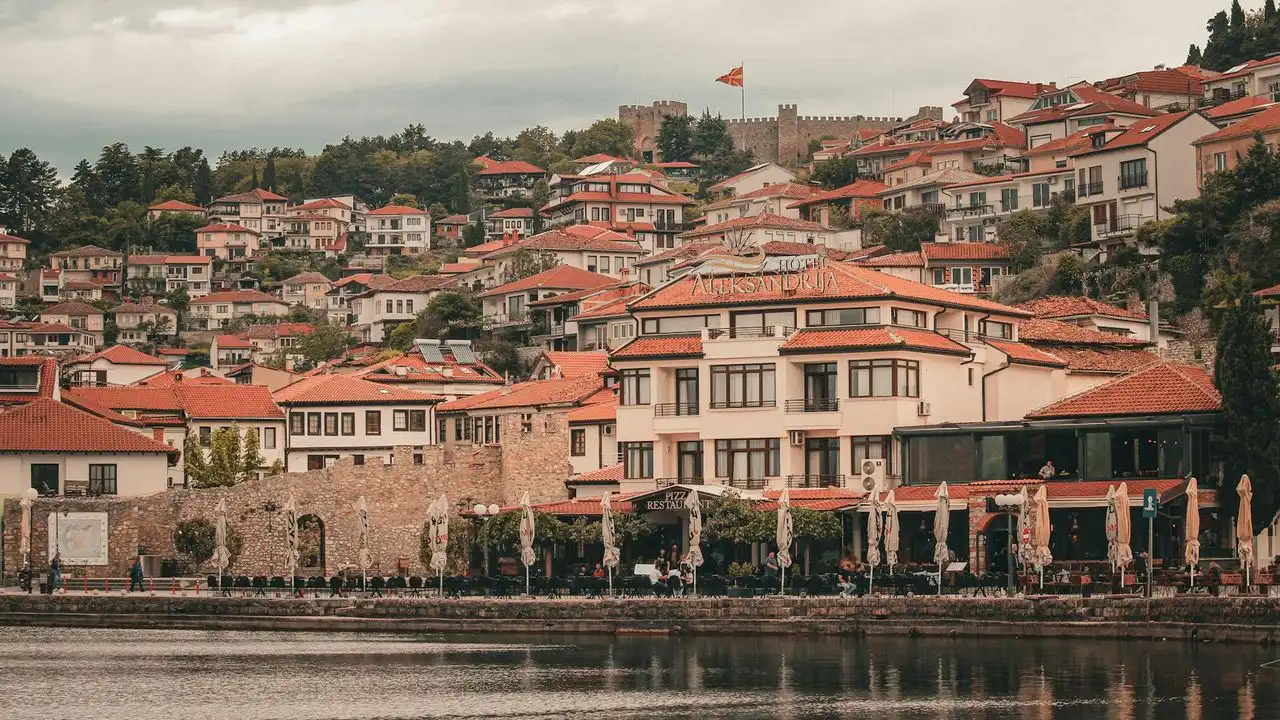
Macedonian and Serbian are both South Slavic languages with deep historical and linguistic ties.
They share a lot of the same vocabulary and cultural background.
However, there are major differences in their grammar, alphabets, and sentence structures.
Learning one will absolutely give you a head start if you decide to study the other.
Below is a complete breakdown of the key similarities and differences between Macedonian and Serbian.
Table of Contents:
Language family and roots
Macedonian and Serbian belong to the exact same language branch.
This means they evolved from a common ancestor language many centuries ago.
Because of this shared history, you’ll find hundreds of identical words in both languages.
They also share similar pronunciation rules and sound very alike to an untrained ear.
Both languages are deeply influenced by neighboring Balkan languages and Turkish.
Alphabet and writing systems
Macedonian strictly uses the Cyrillic alphabet for all official writing.
Serbian is unique because it uses both the Cyrillic and Latin alphabets equally in daily life.
Both Cyrillic alphabets are very similar, but they feature a few unique letters.
Macedonian has the special letters Ѓ (gj), Ќ (kj), and Ѕ (dz).
Serbian doesn’t use those exact letters, but instead has Ђ (đ) and Ћ (ć).
Both languages share the special Cyrillic letters Љ (lj), Њ (nj), and Џ (dž).
Grammar: the case system
The absolute biggest difference between Macedonian and Serbian is how they handle nouns.
Serbian uses a complex system of seven grammatical cases.
This means the ending of a Serbian noun constantly changes depending on its role in the sentence.
Macedonian lost its case system almost entirely over hundreds of years.
Instead of changing noun endings, Macedonian relies on prepositions.
This makes Macedonian much closer to English in terms of building basic sentences.
Grammar: definite articles
Macedonian uses definite articles to say “the”, but they’re added to the end of the word.
These are called suffixed definite articles.
For example, grad means “city”, and gradot means “the city”.
Serbian doesn’t have definite articles at all.
In Serbian, you simply use the base noun and context tells the listener if it’s specific or general.
Verbs: the missing infinitive
In English, we use infinitive verbs like “to eat” or “to sleep”.
Serbian has standard infinitive verbs that usually end in “-ti” or “-ći”.
Macedonian completely lost the infinitive verb form over time.
To say “I want to sleep” in Macedonian, you literally say “I want that I sleep”.
Сакам да спијам.
You use the word да (da) combined with a present tense verb.
Serbian speakers also use this да construction frequently, but they still retain and use formal infinitive verbs.
Vocabulary comparison
Many everyday words are identical or nearly identical in both languages.
Како си?
The phrase above is exactly the same in both Macedonian and Serbian.
However, there are also plenty of false friends and completely different terms.
Here’s a simple table showing some basic vocabulary differences and similarities.
| English | Macedonian | Serbian |
|---|---|---|
| Good morning | Добро утро (Dobro utro) | Добро јутро (Dobro jutro) |
| Thank you | Благодарам (Blagodaram) / Фала (Fala) | Хвала (Hvala) |
| Bread | Леб (Leb) | Хлеб (Hleb) |
| Water | Вода (Voda) | Вода (Voda) |
| Always | Секогаш (Sekogaš) | Увек (Uvek) |
| House | Куќа (Kuḱa) | Кућа (Kuća) |
Mutual intelligibility
Macedonians and Serbians generally understand each other very well.
Macedonians easily understand Serbian because they’re heavily exposed to Serbian music, movies, and television.
Serbians can understand spoken Macedonian, but they usually find it a bit harder.
The lack of grammatical cases and the different vocabulary in Macedonian can confuse a Serbian speaker who hasn’t been exposed to it.
If both speakers talk slowly and use standard vocabulary, they can easily hold a basic conversation.
If you’re ready to start learning, I highly recommend using Talk In Macedonian.
It’s the absolute best platform available for mastering Macedonian phrases, grammar, and vocabulary from day one.
