
Transitioning From Another Slavic Language To Macedonian

Author
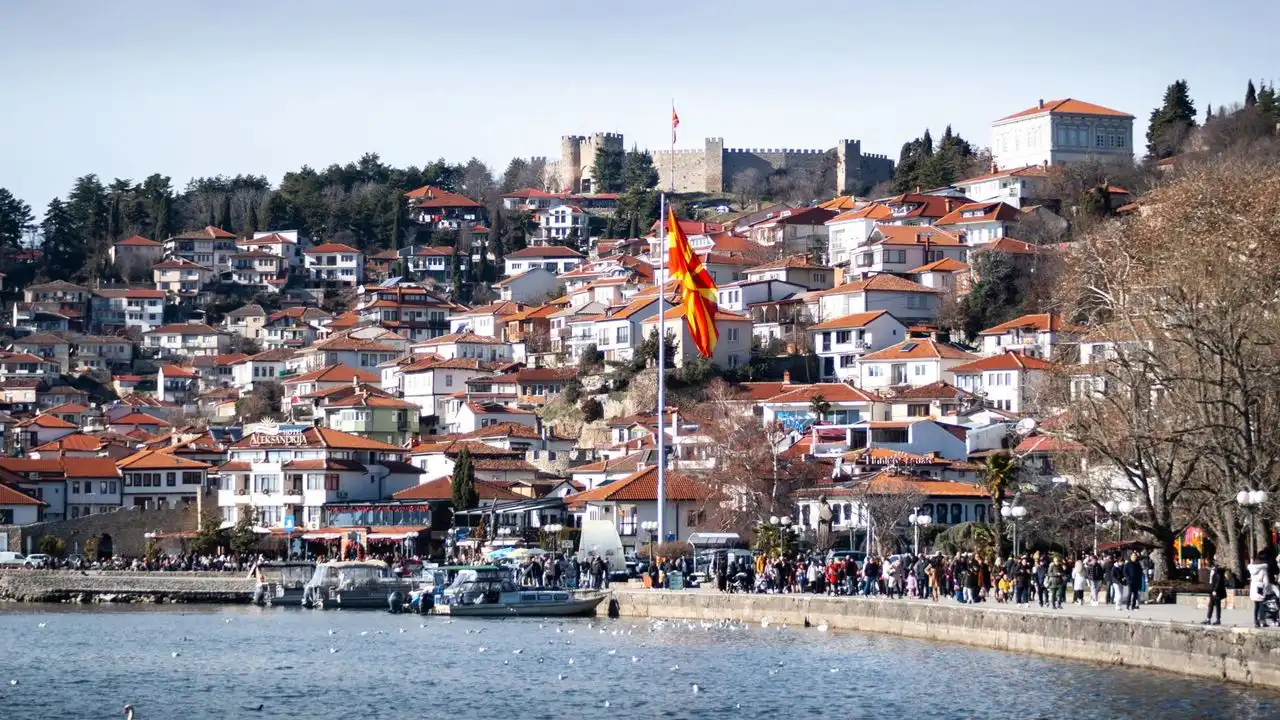
Learning Macedonian is much easier when you already speak another Slavic language.
You already have a massive head start with shared vocabulary and familiar sounds.
Many common words for family, food, and daily life are nearly identical across the Slavic language family.
However, Macedonian grammar has evolved differently from languages like Russian, Polish, and Czech.
Macedonian belongs to the Balkan sprachbund, meaning it shares unique grammatical traits with its geographic neighbors.
If you understand a few key structural differences, you can transition your existing Slavic knowledge into fluent Macedonian very quickly.
Table of contents:
The biggest relief: no noun cases
Most Slavic languages are famous for their complex noun cases.
If you speak Russian, Polish, or Croatian, you’re used to changing the ending of every noun depending on its role in a sentence.
Macedonian completely lost its noun case system over time.
Nouns in Macedonian almost never change their endings based on grammatical case.
Instead, Macedonian relies entirely on prepositions to show the relationship between words.
The most important preposition you’ll use is na (на).
This tiny word replaces the genitive, dative, and prepositional cases you might be used to in other Slavic languages.
Книгата е на Марија.
Одам во продавница.
This makes speaking Macedonian incredibly freeing for learners.
You can simply stack words together using prepositions without pausing to calculate case endings.
Definite articles go at the end of words
Slavic languages typically don’t use words for “the” or “a”.
Macedonian is a rare exception because it has definite articles.
Instead of putting a separate word in front of the noun, Macedonian attaches the article directly to the end of the word as a suffix.
The most common definite article suffix is -ot for masculine nouns, -ta for feminine nouns, and -to for neuter nouns.
Here’s how the suffix system works in practice.
| English | Indefinite (A/An) | Definite (The) |
|---|---|---|
| City (masculine) | Град (Grad) | Градот (Gradot) |
| Book (feminine) | Книга (Kniga) | Книгата (Knigata) |
| Child (neuter) | Дете (Dete) | Детето (Deteto) |
There are also specific suffixes to indicate spatial distance, such as pointing out an object close to you or far away.
This post-fixed article system might feel strange at first, but it quickly becomes second nature.
The missing infinitive verb form
Another major difference is that Macedonian lacks an infinitive verb form.
In languages like Russian or Serbian, you learn verbs in their base infinitive form ending in -t or -ti.
Macedonian dictionaries simply list verbs in their first-person present tense form.
When you want to say “I want to read” or “I have to go”, you must use a special construction.
Macedonian connects verbs using the particle da (да).
You conjugate both verbs to match the subject of the sentence.
Сакам да читам.
Тој мора да работи.
Notice how chitam (I read) and raboti (he works) are both fully conjugated in the present tense.
This structure is heavily used in everyday speech and is a defining feature of the language.
The unique Macedonian Cyrillic alphabet
Macedonian is written in the Cyrillic alphabet.
If you already read Russian, Ukrainian, or Serbian, you’ll adapt to the Macedonian alphabet in just a few minutes.
However, there are a few unique letters specific to Macedonian that you need to know.
These letters were standardized by the linguist Blaže Koneski to capture specific regional sounds.
The letter Ѓ (ѓ) sounds like a soft “g” or “gy” in English.
The letter Ќ (ќ) sounds like a soft “k” or “ky”.
The letter Ѕ (ѕ) looks like an English “S” but is actually pronounced as “dz”.
You’ll also see Џ (џ) which makes an English “j” sound, and the letters Љ (љ) and Њ (њ) which are shared with Serbian.
Vocabulary and regional loanwords
Your Slavic vocabulary will carry you very far in Macedonia.
You’ll instantly recognize words for numbers, colors, body parts, and basic verbs.
Because of the region’s history, Macedonian also contains a large amount of Turkish loanwords.
Many everyday objects and cultural concepts use words left over from the Ottoman Empire.
For example, the word for blanket is ḱebe (ќебе) and the word for window is pendžer (пенџер), though the Slavic prozorec (прозорец) is also used.
You’ll also encounter plenty of modern English and international loanwords.
If you want a structured path to bridge the gap between your current Slavic language and Macedonian, I highly recommend signing up for Talk In Macedonian.
You’ll adapt to the vocabulary quickly just by exposing yourself to authentic audio and text.
